Intro
Zaun. Piltover’s shadow. Once a colony, now the spark of revolt. The unwanted bastard child of an ever-expanding Piltover. Yet out of this rejection, self-awareness is born, along with a struggle for autonomy and independence. At the head of this new movement stands Silco.
Thousands of kilometres away, in our own world and time, a fire of rebellion also flared up; fire that gave birth to self-awareness, reforms, and the drive for independence. That fire was Thomas Sankara.
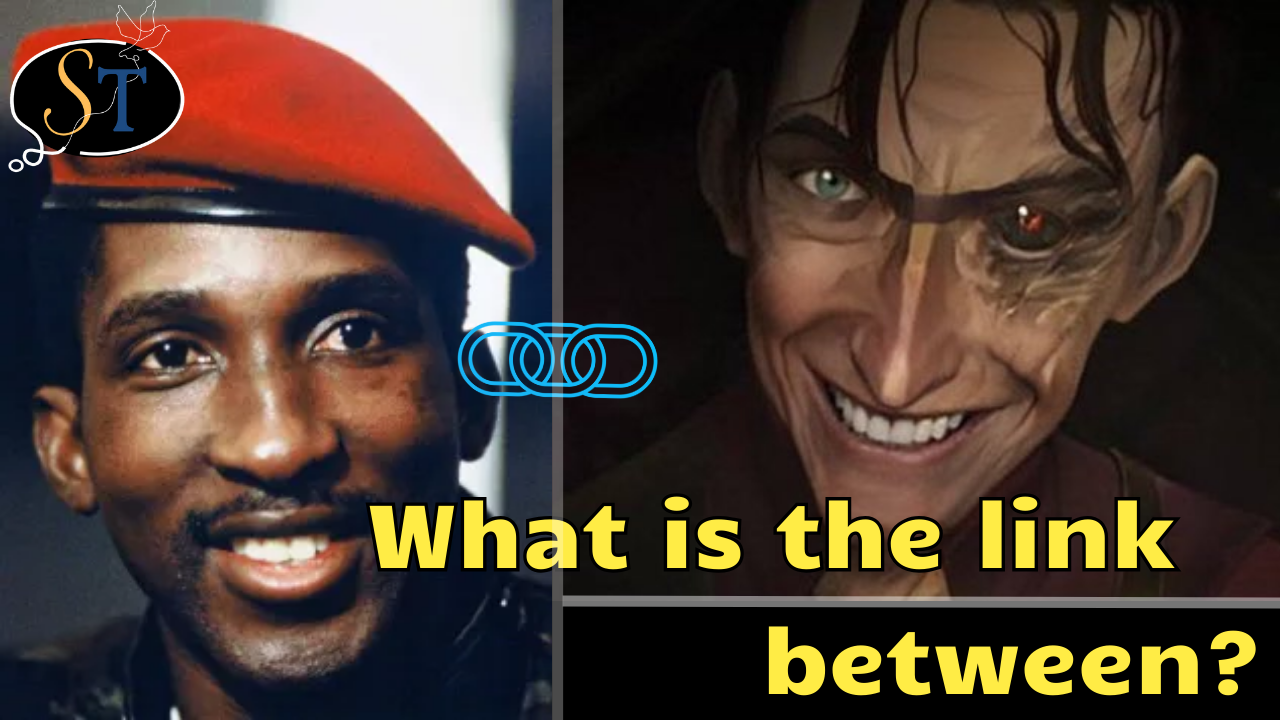
One is the antihero of a dark Netflix animation. The other is a flesh-and-blood human being who became a national hero and a symbol of anti-colonial struggle.
What binds these two figures together? Must every revolution devour its fathers? Is it possible to preserve the idea without losing oneself along the way?
This is a story about a fire that burns too brightly and is an insult to some. A story about the cost of rebellion and the tragedy of revolution. This is the story of Silco. And of Thomas Sankara.
Disclaimer: I am not equating a fictional antihero with a national hero. I am placing them side by side to show how two different worlds and two different moral universes were crushed by the same universal forces: the trap of power, the burden of rebellion, and the poison of betrayal.
Revolution and betrayal
Despite the distance between these two revolutions, each unfolding in a different world, they spring from the same source: a desire to overturn the existing status quo and a deep humiliation born of having no control over one’s own world. Both revolutions needed a leader who could lead freedom to the barricades and change the course of history.
In Zaun, the leader was Silco. He emerged from the shadow of an earlier, already failed uprising that he had led alongside Vander. Their revolt was anti-imperial and social in nature, aimed squarely at Piltover. Both of them dreamed of a free Zaun. Everything fell apart when, on the bridge between Piltover and Zaun, Silco hurled a Molotov cocktail at the enforcers. That act set off a brutal crackdown and the deaths of many. It was then that Vander decided violence was neither an answer nor a solution. He chose instead to negotiate with Piltover in order to secure a measure of peace for Zaun. For Silco, Vander’s compromise was an act of betrayal, one sealed when his own “brother” tried to drown him in the name of a fragile peace with the oppressor.
Silco went on to build his own underground empire. By exploiting Shimmer and the chem-barons, he sought to topple the legacy of both Vander and Piltover. In doing so, he gave the fractured undercity a single purpose: independence at any cost.
Meanwhile, as Silco was constructing his fictional empire, in the real world, in West Africa, a young army captain was beginning his own revolution. Thomas Sankara came to power in one of the poorest countries on Earth: postcolonial Upper Volta. Colonial legacies and corruption did nothing to ease his task. One of his first moves was to break with the colonial past. He rejected the French colonial name “Upper Volta” and rechristened the country Burkina Faso, the Land of the Upright People.
Sankara declared war on corruption and neocolonial dependency. He traded government limousines for modest Renault 5s. He refused to repay the country’s debt to the IMF.
His other measures were just as radical and just as swift. Within four years, he launched a mass vaccination programme that reached millions of children. The vaccinations were carried out without significant external support; a feat almost unheard of on a continental scale. He also initiated a tree-planting campaign to halt the country’s desertification, resulting in ten million trees being planted. He was ahead of his time in banning female genital mutilation. He fought for women’s rights in government and in society. Sankara became a symbol of hope for the entire continent; a living proof that dignity and self-reliance were possible.
Two stories of nation-building. One from dark fiction. The other from the true world. Nations and leaders striving for independence. And both stories end in the same tragedy.
Silco’s entire path to power was defined by his sense of betrayal at Vander’s hands. The story of Thomas Sankara shows how deep that tragedy can cut. Sankara’s closest friend and comrade in revolution was Blaise Compaoré. Together, they carried out the coup that made Burkina Faso’s transformation possible. And it was Compaoré who, four years later, stood at the head of another coup, this time with Thomas Sankara himself as the target.
Two stories. Two worlds. The same tragedy of betrayal. What gave these leaders the strength to sweep multitudes along with them? What brought their dreams to an end in fire and blood?
To understand that, we must look at the tool they both wielded with masterful precision. It was not a weapon. It was not money.
It was myth; a weapon that required no gunpowder, a foundation that could shatter empires.
The myth that builds a nation
To help us grasp the nature of myth, we can turn to the French theorist Georges Sorel. For Sorel, a political myth is not a fairy tale, a lie, or a fantasy. It is a coherent, emotionally charged vision of the future meant to mobilise people to act here and now. It is not a pre-set blueprint that can be carefully calculated in a spreadsheet. Myth is an image of final acts culminating in total victory. Myth is meant to seize hearts, not persuade minds. Myth does not answer the question how. Myth answers the questions why and what for.
Silco wielded the tool of myth with masterful precision. His myth was the nation of Zaun. The people of Zaun longed for a story of independence that would give meaning to decades of humiliation and rejection. Every act of aggression from Piltover, every spit, every contemptuous glance, every toxic puddle or noxious fume. Everything became fuel for the myth. Silco did not promise his people some dramatically better life. His narrative did not centre on improving social conditions. You would look in vain for promises of higher wages, safer streets, or social programmes. Silco offered something far more compelling in that moment: he gave his people an enemy at whom they could direct their anger, and the promise of a day when everything would change. His myth united them in hatred.
Thomas Sankara’s myth was forged from entirely different stone. His Land of Upright People was a direct antidote to the toxin of colonial mentality. Sankara’s story was one of rejecting alms and reclaiming dignity. Every reform in Burkina Faso was not only a political measure but also fuel for his myth. Public vaccinations were a tangible declaration that the people of Burkina Faso could care for themselves. Planting trees was an act of building the future with their own hands. Refusing to pay the IMF debt was yet another assertion of sovereignty. Sankara’s myth united people in hope and in the desire for self-reliance.
Two myths. One born of darkness, the other of light. Both were equally powerful tools that set societies in motion. Yet every myth has its price and the price of these two myths was paid in two different currencies.
The Price of revolt: Dependence or isolation
Silco and Sankara built their revolutions on powerful myths in Sorel’s sense. Yet myth must be sustained, and rebellion must be fed. This is where we arrive at the price that has to be paid. In one myth, the payment took the form of toxic dependence; in the other, of heroic yet deadly isolation.
In Silco’s world, that price has a very concrete form: Shimmer. Shimmer is not just a narcotic. It is a metaphor for every shortcut, every Faustian bargain that promises strength here and now in exchange for long-term sovereignty. It is a loan taken out on the body. Silco, as a pragmatist and supreme leader, accepted Shimmer. He used it as a tool meant to level the playing field with the more technologically advanced Piltover.
For a moment, Shimmer worked perfectly. But the cost was brutal. In the process, Silco made his people dependent on the chemical power that Shimmer bestowed. More importantly, he made them dependent on himself as its sole supplier. He poisoned the people of Zaun to give the city its strength to fight, failing to see that the means he had chosen were destroying the very goal: a Zaun of healthy and free citizens.
The real-world “Shimmer” offered to Sankara took the shape of IMF loans, World Bank programmes, and development aid from former colonial powers. Sankara saw exactly what these were: yet another set of shackles, this time neocolonial ones. A modern form of debt designed to keep Burkina Faso in check. His decision was uncompromising: he rejected these offers.
He refused to repay the debt and to accept the IMF’s terms. He chose radical self-sufficiency. It was an act of unimaginable courage. Sankara shielded his country from toxic dependence on capital. Burkina Faso stood proud. Yet it stood alone in that pride. By rejecting the IMF and the World Bank, he wounded their pride and undermined the neocolonial system that allowed (and still allows) Africa to be exploited. The nation thus avoided the poison, but remained on its own.
Silco accepted the poison to give his people strength, and in doing so destroyed them from within. Thomas Sankara rejected the poison to save his nation’s soul, and in doing so exposed himself to a blow from outside. This is the tragic choice facing every revolution: to die quickly, with dignity, or to live long on your knees.
The trap of power
Michel Foucault studied the invisible mechanisms of power; the very mechanisms into which Silco and Sankara fell as revolutionaries. For Foucault, power is not something one can simply possess or seize. It is not a crown a king can place on his head, nor a weapon that can be taken away. It is an invisible web of relations, norms, laws, and institutions that entangles the whole society defining what is normal and acceptable, and what is not. What is sacrum and what is profanum.
The problem with power is that any attempt to take hold of it ends in becoming entangled in this web. To maintain power, a certain status quo must be preserved. Those in power are compelled to use its instruments: control, discipline, surveillance, and violence.
Silco is a textbook example. His aim was to free Zaun from Piltover’s oppressive control. Yet the moment he himself became a regional warlord, he began, unconsciously albeit, to copy the mechanisms of his enemies. He created his own apparatus of coercion in the form of enforcers. He maintained order through fear and the intimidation of the chem-barons. He controlled the population through the key resource that was Shimmer. In his rebellion against Piltover, not only did Silco not destroy the system of oppression but he replicated it and became its new local manager. He turned into a mirror image of what he despised.
The story of Thomas Sankara, by contrast, shows how this web of power operates in our own world and on a global scale. The power Sankara had to confront reached far beyond the Land of the Upright People. It was a vast international network woven from postcolonial powers and neocolonial interests. The IMF, the World Bank, the French government, and corporations all drew profit from Africa. Sankara’s revolution was an attempt to remove his country from that equation.
The coup that overthrew Sankara was not merely the betrayal of a long-time friend. It was a brutal act in which the global network of power “corrected” an anomaly that threatened the well-being of neocolonial powers. The system eliminated an element that refused to play by its rules. Sankara was destroyed by an invisible global structure that he had dared to challenge.
Both Sankara and Silco became victims of power. You cannot defeat the system while standing at its summit. Power follows its own laws and the most tragic of these is that revolution very often ends on the very same throne from which it once sought to cast down the tyrant.
The final sacrifice and the shadow from outside
Every system of power has its henchmen. This is not some abstract phantasmagoria, but a human face; the face of the traitor whom Dante placed in the final circle of his Hell. Silco and Sankara were both defeated by concrete individuals who delivered the final thrust on behalf of a wider network of power.
In Arcane, Silco achieves everything he ever dreamed of. He is a step away from securing independence for the nation of Zaun, and on his terms. It is at that very moment that he dies. Not in a coup at the hands of a Piltover soldier, but at the hands of Jinx. Jinx was the very meaning of Silco’s struggle, and his final words “you’re perfect” are addressed to her as a daughter, not as a symbol of revolution. In the end, paternal love for his child triumphed over the myth of the nation.
Sankara’s revolution was likewise smothered from within by the already mentioned Blaise Compaoré, his comrade-in-arms. Although the trigger was pulled by men under Compaoré’s command, a geopolitical shadow hangs over that tragedy. Many historians and analysts point to serious indications that France and the United States, fearing Sankara’s anti-imperialist stance, actively supported or, at the very least, silently condoned the coup.
From this perspective, Compaoré’s betrayal ceases to be merely an act of personal ambition. It becomes a tool in the hands of a global network of power which, as in Foucault’s analysis, brutally “corrected” the anomaly represented by an uncompromising and independent African leader.
Ultimately, both men died because they had become a problem: Silco, for the fragile peace between the two cities; Sankara, for a powerful global order.
Coda – Can a myth endure?
What, then, remains when a revolution loses its momentum and its leaders die?
What was left of Silco and Sankara?
In Silco’s wake, chaos took hold. The vacuum that emerged was filled by even greater violence. His myth of a Zaunite nation, united in hatred, died with him. Only the hatred remained.
After Thomas Sankara, his successors dismantled his reforms, and for decades the country sank into corruption and political instability. Yet his myth of the Land of the Upright People, the idea of dignity, integrity, and independence endured. The man was killed, but the myth could not be crushed. Sankara became a national hero and a symbol for the people.
And yet, one is left with a question: how to fight the system without becoming one of its soulless mechanisms? How to fight the system from below and still be heard? Can a myth survive on its own, without the right people to bear it?
I don’t know.
Bibliography
These particular books affected the overall shape of the article
- Georges Sorel - Reflections on Violence
Sorel’s concept of the “political myth” is central to understanding Silco’s strategy. This book explores how myths—not rational plans - are what truly mobilize masses and incite revolution. It clarifies why Silco didn’t need a spreadsheet of reforms, but a compelling story of vengeance and destiny.
Buy on Bookshop.org from my affiliate link - Michel Foucault - Discipline and Punish
Foucault’s analysis of power as a “web” rather than a possession perfectly mirrors the trap Silco falls into. It explains how revolutionary leaders often end up replicating the very systems of control - surveillance, enforcers, and discipline - that they sought to destroy.
Buy on Bookshop.org from my affiliate link - Thomas Sankara - Thomas Sankara Speaks
To understand the “real-world Silco”, one must turn to Sankara himself. This collection of speeches reveals the depth of his vision - and the immense courage it took to reject the “Shimmer” of neocolonial aid. It documents the practical application of dignity that the essay contrasts with Silco’s compromised revolution.
Buy on Bookshop.org from my affiliate link